How Long Does It Take to Paint a House?
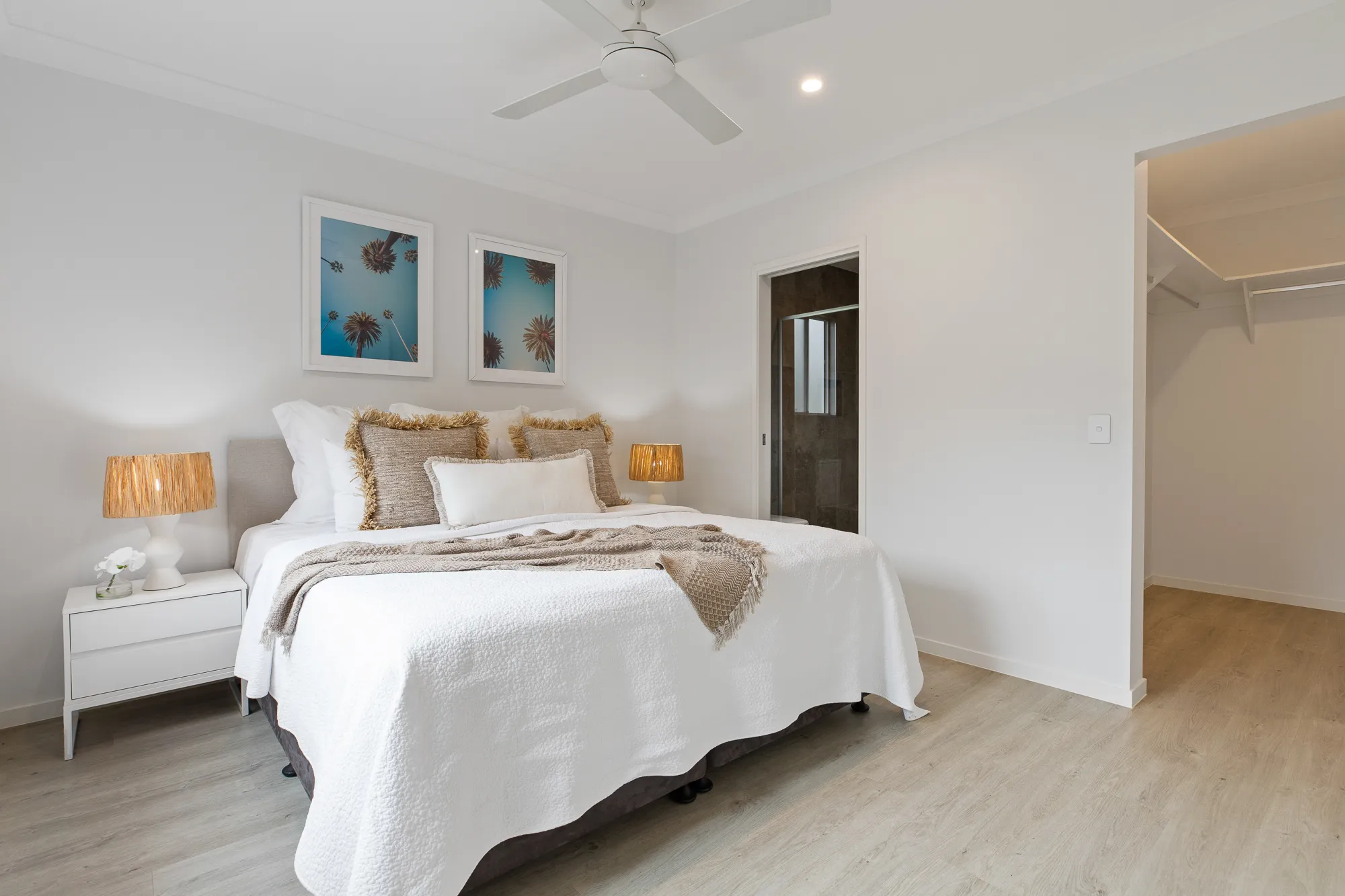
When you’re planning a repaint, the price is only half of it. You also need to know whether painters will be around for two days, a week or most of a month, so you can plan around work, school runs, pets, tenants or a moving date.
Below are guide timeframes for residential repaints on the Gold Coast and Tweed Coast, plus what can make a job quicker or slower.
Quick answer
A single room can often be finished in a day or two. A full 3 or 4-bedroom interior is usually somewhere between about one and three weeks of working days, and exteriors depend heavily on height, access and weather. For the guide below, we’ve assumed roughly two painters working on a repaint in reasonable condition, with standard ceiling heights and no major repairs.
| Scope | Guide working time |
|---|---|
| Single bedroom – walls and ceiling | 1–2 days |
| Several rooms (3–4) – walls and ceilings | 3–5 days |
| 3-bed interior – walls and ceilings | 4–7 days |
| 3-bed full interior incl. doors and trims | 7–12 days |
| 4-bed full interior | 8–15+ days |
| Single-storey exterior | 6–10 days, plus weather |
| Two-storey exterior | 10–15+ days, plus weather |
| Full interior + exterior | 3–5+ weeks |
These are guide working days, not guaranteed calendar durations. A larger crew can reduce the number of days, although adding painters doesn’t shorten a job in a straight line. Preparation, repairs, trims, height, access, the coating system and weather can all extend these ranges, and some jobs will fall outside them.
If you also want guide prices for the same scopes, see how much it costs to paint a house on the Gold Coast.
How long does it take to paint a 3-bedroom house?
“Three bedrooms” tells a painter less than you’d think. A modern low-set home with sound walls and simple trims is a very different job to an older home with cracked cornices, lots of patching and every door needing attention.
For a 3-bedroom interior, the biggest difference is the scope:
- Walls only: the quickest option, often suited to a refresh where ceilings and trims are in good shape.
- Walls and ceilings: around 4–7 working days as a guide. Ceilings take longer than people expect because of the cutting in and the time spent on ladders or planks.
- Full interior: walls, ceilings, doors, frames, architraves and skirtings, at around 7–12 working days. Trim work is slow because every edge needs sanding, filling and careful brushwork.
How long does it take to paint a 4-bedroom house?
The range widens as homes get bigger, which is why our 4-bedroom guide is 8–15+ working days. Bedroom count is only a rough starting point. What moves a 4-bedroom job up or down:
- single-storey versus two-storey
- standard versus high or raked ceilings
- stairwells and double-height voids
- multiple living areas, a media room or a study
- ensuites and walk-in robes, which are small but fiddly
- detailed trims, VJ panelling and feature walls
A compact 4-bedroom project home can sit at the lower end. A large two-storey home with voids and plenty of trim work can run well past 15 days.
Interior only, exterior only, or both
Interior
Interior timing depends a lot on how the house is being used. Furniture has to be moved and protected, rooms handed back in a sensible order, and coats need time to dry before the next one goes on. Doors and trims add days. More on our interior painting service.
Exterior
Outside, the job usually starts with washing, and surfaces need to dry before preparation and painting. Then come scraping, sanding, filling and priming, followed by the coats themselves. Scaffolding or other access equipment may need to go up first. Sun, rain, humidity and wind all affect when coatings can go on, and repairs such as rotten timber can add time. More on our exterior painting service.
Interior and exterior together
Doing both doesn’t always mean adding the two timelines together. Depending on the job, painters may be able to work inside while exterior surfaces dry, or move indoors when the weather turns. Our guide for a full interior and exterior is 3–5+ weeks of working days.
What takes the most time when painting a house?
Preparation
Applying paint is only part of the job. Before any colour goes on there’s filling, patching, sanding, scraping loose paint, caulking gaps, washing, treating mould, priming bare timber, dealing with failed coatings and sealing repairs. On a house that’s been well maintained, prep might be a modest part of the job. On a house with peeling or chalky paint, it can take as long as the painting.
Repairs
Normal preparation covers small holes and minor cracks. Larger repairs take extra time, and sometimes another trade:
- cracked render
- rotten timber in fascias, sills or posts
- damaged plasterboard
- cornices pulling away from the ceiling
- water damage
Doors, trims and detailed work
Open walls go quickly with a roller. Doors, frames, architraves, skirtings, window frames, shutters, balustrades, VJ panelling and detailed timberwork are slower, with more sanding, cutting in and care.
High ceilings and access
Stairwells, voids and high ceilings need planks, towers or scaffolding, which take time to set up and move. Outside, two-storey walls, steep blocks and pools may call for scaffolding, mobile towers or an elevated work platform.
Colour changes and number of coats
Many repaints are allowed for two top coats, but the actual coating system depends on the existing colour, substrate, condition and product being used. Strong colour changes, repairs or poor coverage can require primer, sealer or additional coats, and each extra coat adds drying time as well as painting time.
For more detail on how the product, surface and existing coating affect the system, see our guide to how many coats of paint a house needs.
Does the number of painters make the job twice as fast?
Not quite. More painters can shorten a job, but it doesn’t scale perfectly.
- Prep can often be split up, and painters can work in separate rooms or on different sides of the house.
- Drying time between coats doesn’t change, no matter how many people are on site.
- Small rooms get crowded, and too many people in one space slows everyone down.
- Exterior access equipment limits how many painters can work safely at height at once.
Does an empty house get painted faster?
Generally, yes: less furniture to move, easier access, no room-by-room handover, fewer interruptions and simpler protection and setup.
That doesn’t mean you need to move out. Occupied homes can normally be staged room by room or area by area so the household can keep functioning as much as practical.
Do you need to move out while your house is being painted?
For a standard repaint, usually not. The sequence can be planned around bedrooms, children, pets, people working from home and the living areas you rely on most. Some rooms will be unavailable while they’re being painted and while coats dry, so it helps to talk through which areas matter most before work starts. Ventilate painted areas where practical and follow the product guidance while coatings dry.
How does Gold Coast weather affect exterior painting time?
Exterior schedules need some flexibility here. Rain stops work and can mean waiting for surfaces to dry out again. High humidity slows drying. Exterior surfaces need to be sufficiently dry before they’re coated, so overnight dew and moisture can affect when work starts, and painters need to allow enough drying time before evening moisture returns.
Strong sun and heat can affect how coatings apply and dry, so exterior areas may be sequenced to avoid the harshest direct sun where practical. Wind brings dust and can affect application. Near the coast, surfaces may need washing to remove salt before painting.
Suitable conditions depend on the coating system and the manufacturer’s instructions. If you’re deciding when to schedule exterior work, our guide to the best time of year to paint a house on the Gold Coast looks at local rainfall patterns and seasonal conditions in more detail. Our guide on the best exterior paint for the Gold Coast climate covers coatings for local conditions.
How long does paint take to dry?
There are four different stages, and they can be very different lengths:
- Touch dry: the surface can be touched lightly without marking.
- Recoat time: when the next coat can go on.
- Ready for normal use: when furniture can go back and the room can be used gently.
- Fully cured: when the paint reaches its full hardness and durability.
Each depends on the exact product, temperature, humidity, ventilation and the surface underneath, so there isn’t one universal drying time. Follow the manufacturer’s product data sheet for the product used.
What can homeowners do to help the job move faster?
- Settle your colours before work starts.
- Take down pictures, mirrors and small wall items.
- Move fragile or valuable items out of the way.
- Keep access clear, including driveways and side paths.
- Keep pets secure and away from work areas.
- Tell us which rooms need to stay usable, and when.
- Make decisions on any repairs promptly.
- Let us know about access or timing restrictions before work begins.
You don’t need to empty the house. Clearing the small things just saves time.
For a full room-by-room checklist, see our guide on how to prepare your house for painting.
Can painting be done faster before selling or moving in?
If there is a firm sale, settlement or move-in date, tell us at the quote stage. Depending on the job and availability, the work may be able to be staged differently, key areas prioritised or additional labour used where practical. It’s also much easier to paint before furniture arrives than after, so if your access dates allow, leaving a gap before the removalists arrive can make the job easier.
If you’re still deciding how much painting is actually worth doing before listing, see our guide on whether you should paint your house before selling.
How we estimate a painting timeline
When we inspect a job, we look at the scope, surface condition, preparation, access and any repairs before giving an expected timeframe. We’d rather give you a realistic estimate than a short one that slips. Exterior schedules can still shift because of weather, and hidden repairs found once work starts can add time. Timing is also worth comparing when you look at quotes, which we cover in why house painting quotes are so different.
FAQs
How long does it take to paint a 3-bedroom house?
As a guide, around 4–7 working days for walls and ceilings, or 7–12 working days for a full interior including doors and trims. This assumes roughly two painters and a home in reasonable condition.
How long does it take to paint a 4-bedroom house?
As a guide, 8–15+ working days for a full interior. Two-storey layouts, high ceilings, voids and detailed trims can take it longer.
Can a whole house be painted in a week?
Sometimes. A smaller home with a walls-and-ceilings scope can fit into about a week, and a larger crew can shorten things. A full interior with trims usually takes longer, and a full interior and exterior usually takes several weeks of working days.
Do I need to move out while my house is painted?
Usually not for a standard repaint. The work can normally be staged so the household keeps functioning as much as practical.
How long does exterior house painting take?
As a guide, 6–10 working days for a single-storey home and 10–15+ for a two-storey home, plus any weather delays.
How long after painting can I use the room?
That varies with the product and conditions. Rooms can often be used gently once the paint is dry enough, but full curing takes longer. Your painter can tell you what applies to the product used.
Can rain delay exterior painting?
Yes. Rain, high humidity and wet surfaces can all pause exterior work, which is why exterior schedules need some flexibility.
Getting a realistic timeframe for your home
If you’d like a realistic timeframe for your own place, send us photos and a rough scope through our quote form, or arrange for us to inspect the home. We work across the Gold Coast and Tweed Coast, and we’ll talk you through the expected timing along with the quote.