What Paint Finish Is Best for Interior Walls, Ceilings and Trim?
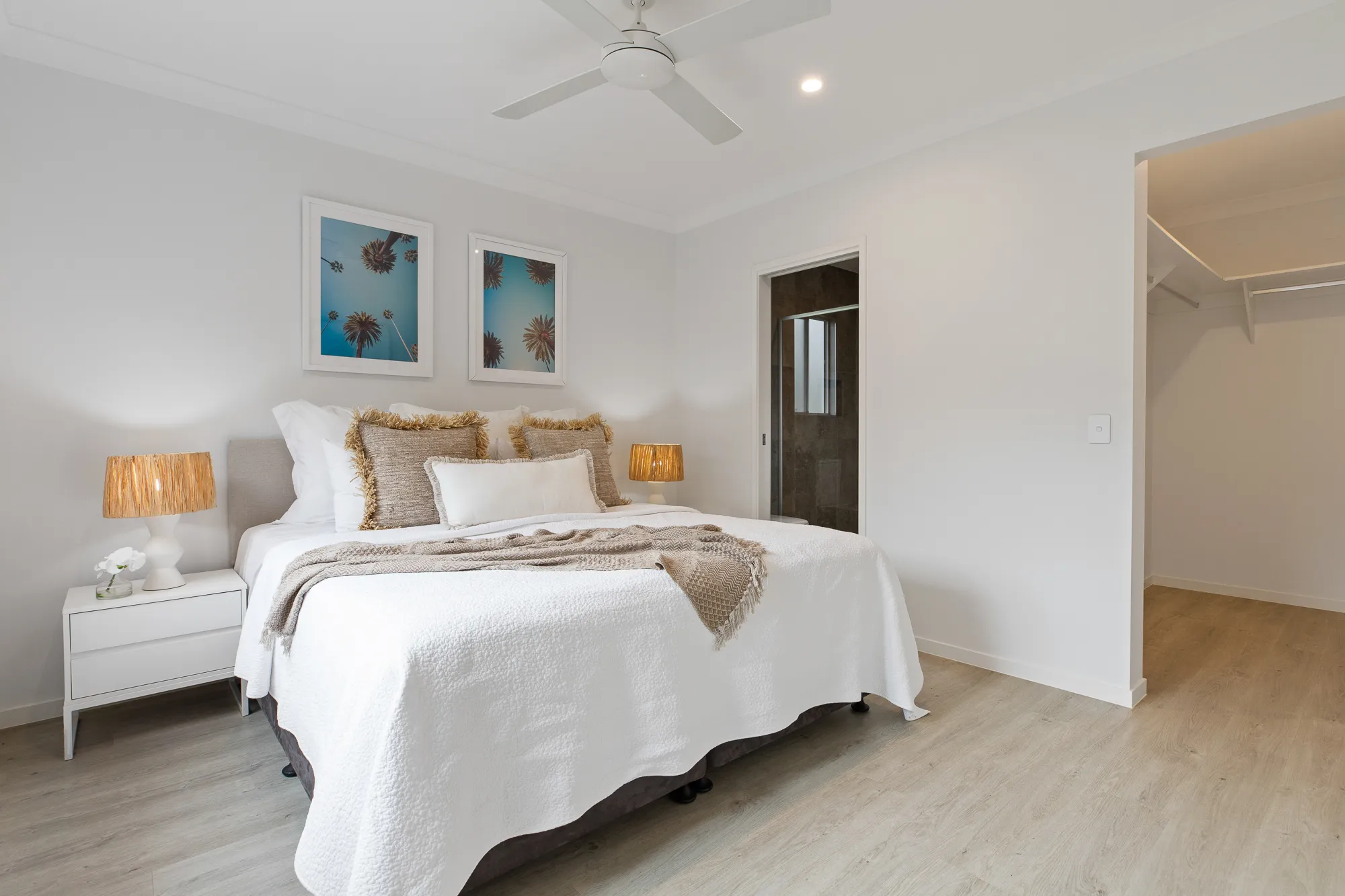
Most homeowners spend their time choosing a colour. Then the next question arrives: do you want matt, low sheen, satin, semi-gloss or gloss? The names can make the decision sound more complicated than it is.
Sheen affects how a surface looks, how much light it reflects, how noticeable imperfections can be and, to a degree, how it handles cleaning. But the sheen label is only part of the picture. The product itself matters just as much: what it’s designed for, where it’s suitable and how it performs. This guide explains the common choices for walls, ceilings, doors and trims, and why a painter might recommend different finishes in different parts of the same house.
Quick guide: common interior paint finishes
| Surface or area | Common finish choices | What matters |
|---|---|---|
| Living room walls | Low sheen, or matt | Look, lighting and how much cleaning the walls get |
| Bedroom walls | Low sheen or matt | Mostly appearance, as traffic is usually lower |
| Ceilings | Flat or matt ceiling paint | Low reflection, and a product made for ceilings |
| Hallways and busy family areas | Low sheen, or a washable matt | How well the product handles marks and cleaning |
| Kitchens | Low sheen or semi-gloss | Cleanability and the product’s suitability for the room |
| Bathrooms and laundries | Products made for humid areas, in various sheens | Moisture and mould resistance, not the sheen name |
| Doors | Enamel in satin, semi-gloss or gloss | Contact, cleaning and the look you want |
| Door frames and architraves | Usually matched to the doors | Consistency with the doors and skirtings |
| Skirtings | Enamel, often matched to the other trims | Knocks, cleaning and a consistent trim finish |
| Feature walls | Often the same sheen as the surrounding walls | How the colour and sheen look in that light |
These are common choices, not rules. The right answer depends on the product, the surface and the result you want.
What does paint sheen actually mean?
Sheen describes how much light a dried paint surface reflects. The lower the sheen, the flatter and softer the surface looks. The higher the sheen, the more light it bounces back and the shinier it appears.
The common names, from lowest to highest reflection, are roughly:
- Flat or matt: very little shine, with a soft, even look.
- Low sheen: a slight, soft sheen. It’s sometimes described as velvety.
- Other mid-sheen finishes: some ranges also use names such as satin, eggshell or low gloss for finishes between their lower-sheen and higher-sheen options.
- Semi-gloss: a noticeable shine.
- Gloss: highly reflective.
One thing worth knowing is that these names aren’t standardised across brands. Some manufacturers publish sheen percentages for their ranges and others don’t. One brand’s “satin” may sit close to another brand’s “low sheen”, and some ranges include finishes, such as eggshell or low gloss, that others don’t offer. So it’s more useful to compare actual products, or look at a sample, than to rely on the name alone.
What finish is commonly used on interior walls?
Low sheen is one of the most common choices for interior walls in Australian homes, and it’s easy to see why. It has a soft appearance, it’s generally practical to wipe down, and it doesn’t reflect as much light as the higher sheens, so it’s more forgiving of minor surface variation.
Matt is often chosen for a flatter, more contemporary look, and for rooms with a lot of natural light where glare across the walls would be noticeable. Traditionally, matt paints marked more easily than higher sheens, which is why some manufacturers still suggest matt mainly for lower-traffic areas. Some premium matt products, however, are now formulated to be washable, which widens where matt can be used.
The condition of the walls matters too. Older walls with years of patching, or plasterboard with visible joins, tend to look better in a lower sheen. A family home with young children and busy hallways may benefit from a product with good washability or scuff resistance, whatever its sheen name. Our interior painting page covers what an interior repaint involves.
What finish is commonly used on ceilings?
Ceilings are commonly painted in a flat or matt finish. Light from windows and fittings often travels across a ceiling at a low angle, and a low-reflection finish helps minimise the appearance of minor surface variation, joins and roller marks.
Many manufacturers make paints specifically for ceilings, designed for application overhead and an even, flat finish. That makes the product choice as important as the sheen.
The exception is ceilings in bathrooms, laundries and other humid rooms. These are exposed to steam and condensation, and a standard ceiling paint may not be designed for that. A product intended for humid areas is generally the better starting point, and the manufacturer’s specifications should guide the choice.
What finish should be used on doors, frames and skirtings?
Doors, frames, architraves and skirtings are commonly finished with enamel-type coatings. These surfaces get handled, knocked, scuffed and cleaned more than walls do, and enamels are designed for that kind of wear.
Enamels are available in different sheens depending on the product: satin, semi-gloss and gloss are common, and some ranges offer a low sheen trim enamel too. Semi-gloss has long been a popular choice for trims because it’s practical and gives a crisp contrast against low-sheen or matt walls. Satin gives a softer look. Gloss gives the most defined, reflective finish, but it also shows imperfections most clearly, so the surface needs to be well prepared.
Water-based enamels are now widely used on interior trims, and oil-based enamels are still available. Moving from one type to the other can affect the preparation and undercoat needed, which is a question for the product instructions rather than a sheen decision. Frames and architraves are usually finished to match the doors, and skirtings to match the other trims, so the trimwork looks consistent through the house.
What about kitchens, bathrooms and laundries?
These rooms deal with things most other rooms don’t: steam, condensation, splashes, grease and more frequent cleaning. That’s why the product matters more here than anywhere else in the house.
For bathrooms, laundries and other humid rooms, the key question is whether the paint is designed for that environment, for example with mould resistance and suitability for high humidity or condensation. Several manufacturers make products specifically for kitchens and bathrooms, and some offer them in more than one sheen. Choosing a coating designed for the environment matters more than choosing a sheen name by itself. A semi-gloss that isn’t made for wet areas isn’t automatically a better choice than a low-sheen product that is.
Kitchens are often painted in low sheen or semi-gloss, with washability and stain resistance the main considerations, particularly around the cooking area and high-touch walls.
Two other points are worth knowing:
- Ventilation still matters. Paint can help a surface cope with moisture, but it doesn’t fix poor ventilation or an ongoing leak.
- Existing mould needs treating first. Mould should be dealt with properly before repainting, not simply painted over.
Does higher sheen hide or show imperfections?
Generally, lower-sheen finishes draw less attention to surface imperfections, while higher sheens can make them more noticeable. The reason is reflection. A shinier surface bounces more light, and any dent, ridge or uneven patch disrupts that reflection, so the flaw stands out.
This is most obvious where light travels across a wall at a low angle, such as a long hallway with a window at one end, or a wall beside a large glass door. Common problem areas include:
- patched holes and repairs
- plasterboard joins
- dents and dings
- uneven older walls
- previously painted surfaces with brush or roller texture
No finish makes up for poor preparation, badly patched surfaces, contamination, an unsuitable primer or failing existing paint. A lower sheen may soften the look of minor variation, but it won’t hide a poorly prepared surface. Our guide on how to prepare your house for painting covers what homeowners can do before the painters arrive.
Is higher-sheen paint easier to clean?
Historically, the answer was mostly yes. Higher-sheen paints generally had a harder, smoother surface that was easier to wipe clean, while flat and matt paints marked more easily.
That relationship is less straightforward now. Some premium matt and low-sheen products are specifically designed to be washable or scuff-resistant, and manufacturers describe them that way. At the same time, not every matt paint is designed for frequent cleaning.
So rather than judging by sheen alone, look at what the product is designed for: washability, scuff or stain resistance, and whether it’s intended for high-traffic areas. If cleaning matters in a particular room, mention it when you ask for a quote so the product can be chosen with that in mind.
Can the same colour look different in another sheen?
It can. Changing the sheen changes how light reflects from the surface, so the same colour can appear a little different depending on the finish, the lighting and the viewing angle. Lighting plays a big part too: morning light, afternoon light and artificial light can all change how a colour and sheen appear.
The difference isn’t usually dramatic, but it’s worth checking if you’re matching trims to walls or choosing a strong colour. A sample painted in the actual sheen, and looked at in the actual room, is the most reliable way to see it.
Should every room use the same finish?
Consistency has its advantages. Using the same wall finish throughout can make a house feel cohesive, keeps touch-ups simpler and means fewer products to keep track of.
But there are good reasons for different surfaces and rooms to use different finishes. A common approach might look something like:
- one finish for general walls
- a flat or matt ceiling paint
- a product designed for humid areas in bathrooms and laundries
- an enamel for doors and trims
That’s not a formula, but it shows why a quote might list several different products. It isn’t overcomplication. Different surfaces have different jobs.
The number of coats is a separate question. Our guide on how many coats of paint a house needs explains how the product, surface and existing coating affect the system.
What should you decide before getting an interior painting quote?
You don’t need to know every product name, but it helps to have thought about:
- which rooms are being painted
- walls only, or ceilings, doors and trims as well
- the current condition of the surfaces
- any colour changes
- which rooms are wet areas
- the look you prefer, such as flatter or with more sheen
- how much cleaning particular walls get
- whether doors, frames and skirtings are included
- the existing coating on trims, if you know it
Once the surfaces and scope are understood, a painter can recommend a suitable product and system for each area. If quotes come back with different products or finishes, that can partly explain differences in price. Our guide on why house painting quotes are so different covers what to compare, and our guide on how much it costs to paint a house on the Gold Coast gives typical figures. For planning around the work, see how long it takes to paint a house.
FAQs
What paint finish is best for interior walls?
There isn’t one best finish for every house. Low sheen is a common choice because it balances appearance with practical cleaning. Matt suits a flatter look and rooms with strong light. The product’s washability and suitability for the room matter as much as the sheen.
Is matt or low sheen better for walls?
It depends on the look you want and how the room is used. Matt gives a flatter finish and is forgiving of minor surface variation. Low sheen has a slight sheen and is often chosen for busier rooms. Some premium matt products are also designed to be washable.
What finish should I use on ceilings?
Ceilings are commonly painted in a flat or matt ceiling paint, which helps minimise the appearance of minor surface variation. In bathrooms and other humid rooms, use a product designed for that environment.
What paint finish is best for doors and skirting boards?
Doors and skirtings are commonly finished in an enamel-type coating. Satin, semi-gloss and gloss are all common, depending on the product and the look you want. Semi-gloss is a popular, practical choice, but it isn’t the only option.
Should bathroom paint be semi-gloss?
Not necessarily. What matters most is that the product is designed for humid areas, for example with mould resistance. Some bathroom products are available in low sheen as well as semi-gloss.
Is higher-sheen paint easier to clean?
Traditionally, yes, but it’s no longer that simple. Some matt and low-sheen products are designed to be washable. Check what the product is designed for rather than judging by sheen alone.
Does gloss paint show more imperfections?
Generally, yes. Higher-sheen finishes reflect more light, which can make dents, patches and uneven surfaces more noticeable. Good preparation matters with any finish, and especially with gloss.
Can I use the same paint finish throughout the whole house?
For general walls, often yes, and it can keep things consistent. Ceilings, wet areas and trims usually suit different products, so most homes end up with a few different finishes.
Planning an interior repaint?
If you’re planning an interior repaint on the Gold Coast or Tweed Coast, send us some photos and a rough scope through our quote form. We can look at the surfaces, rooms and finish requirements and provide a clear written scope for the work.